In the pharmaceutical world, it’s all about timeliness. The cost and the time it takes to develop new drug-based therapies remain high, and sponsors are under pressure to improve efficiency and accelerate go-to-market. Imaging data acquired through clinical trials is increasingly seen as a strategic asset. But in many organizations, it remains underutilized. Unlocking imaging data can help pharma research and development (R&D) as well as clinical operations teams create value and accelerate drug discovery and development.
Imaging Data Use Cases in Life Sciences
Data may hold valuable insights for life sciences organizations, but it often remains obscured by data silos, a lack of structure and disparate formats. The shame is that this data from clinical trials and other research has many downstream use cases and can help organizations make critical decisions about what research is viable.
Biomarker Discovery
Using imaging biomarkers has been shown to increase rates of drug approvals. Early on, they can help gather information about tissue distribution, target engagement and measures of downstream pharmacology, helping to empower internal decision making.
But translating imaging data into a biomarker program remains challenging. It requires the infrastructure to manage imaging data and metadata, plus following data acquisition protocols and the tooling to standardize imaging modality selection and image analysis.
Clinical Trial Imaging Endpoints
Developing imaging data endpoints can give organizations an objective way to measure treatment response and safety, and these endpoints can also be evaluated on retrospective data. Using imaging endpoints can help life sciences organizations reduce sample sizes, shorten timelines and increase confidence in go/no-go decisions — provided that the imaging workflow is high-quality and integrated into the trial operations. Infrastructure and processes often aren’t up to the task, as PACS and other systems used at both the site and sponsor level don’t offer the capabilities required to reach the potential that imaging data offers.
The Challenge: Disparate, Unstructured Data
Despite the promise imaging data holds, many pharma R&D organizations face structural and operational hurdles in realizing it.
Imaging Storage and Format Issues
Imaging datasets come in a variety of modalities, such as MRI, PET and CT. Combining data from disparate formats for research purposes is difficult to accomplish due to their fundamentally unique characteristics.
In addition, imaging data from internal systems, such as PACS, often cannot fully integrate with the clinical trial data in eCRFs or CRO systems, for example. And clinical trial imaging data is often not readily accessible to trial sponsors. That means the ability to combine, access and analyze imaging data from multiple sources becomes severely compromised, making imaging data just another cost center rather than a strategic asset.
Regulatory Compliance Issues
When using imaging from clinical trials, there are certain expectations organizations like the FDA have around auditability, data integrity, and electronic records and signatures. It’s crucial for electronic systems in FDA-regulated trials to comply with 21 CFR Part 11, meaning electronic records and e-signatures need to be as trustworthy, reliable and equivalent to paper versions.
Because imaging data tends to be large, complex and often acquired across geographies, meeting regulatory expectations can become a burden unless the data management strategy is well designed. Without structured, integrated, compliant data management for imaging, pharma R&D are limited to what they can do with that data, leading to missed opportunities, inefficient workflows and regulatory risk.
Streamlining Clinical Workflows
Given the challenges above, how can pharma R&D teams turn imaging data into an accelerator rather than drag? Three areas stand out.
Enabling Biomarker Validation and Trial Readiness
When imaging data is integrated and curated into accessible cohorts, teams can move faster from raw acquisition to analysis-ready datasets. That means fewer delays in biomarker validation and quicker readiness for imaging endpoints in trials.
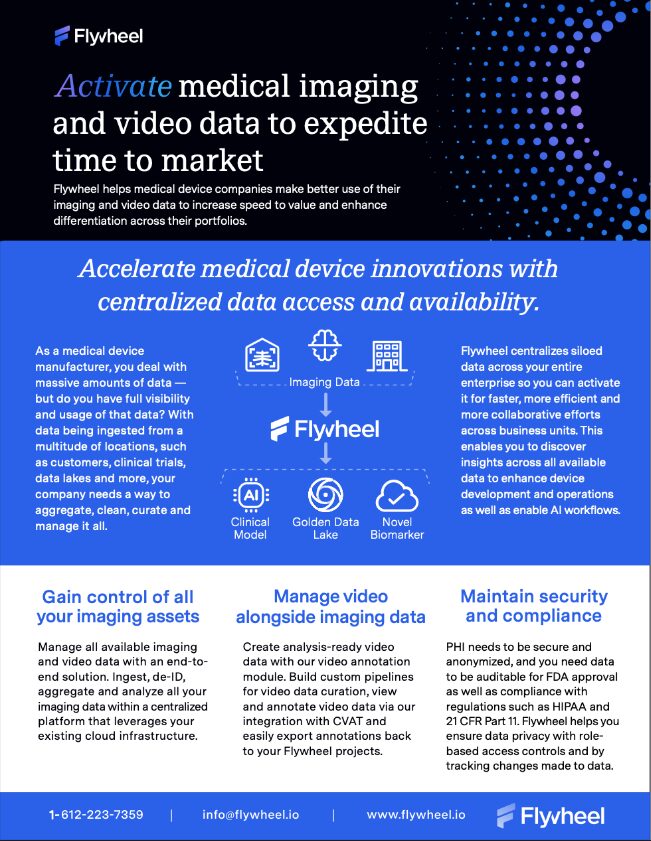
For example, one of the largest pharmaceutical organizations in the world has reported that modernizing its imaging infrastructure with Flywheel’s imaging data management platform eliminated weeks-long delays in gaining data access from CROs, resulting in faster secondary analysis. This transformation accelerated biomarker validation workflows and positioned the company for AI-driven imaging endpoint readiness in future clinical trials.
Centralizing and Harmonizing Data
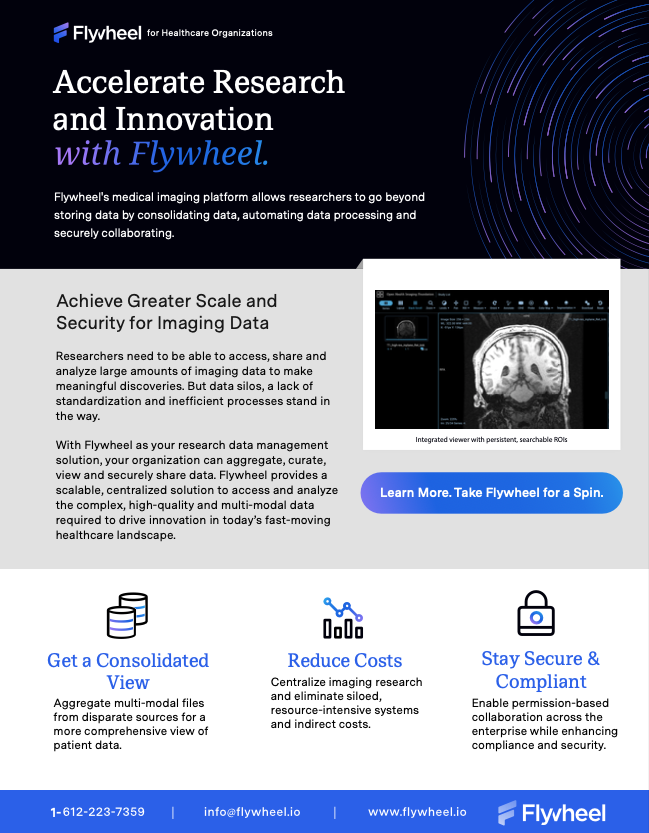
One of the most important ways to enable better imaging workflows is the centralization and harmonization of imaging data across sites, modalities, partners and time-points. In multisite, multireader studies (common in global pharmaceutical trials), it becomes critical to ensure that imaging is accessible, annotated and secure in a single environment rather than scattered across disparate silos.
For example, a global biopharma organization implemented Flywheel to unify imaging data across therapeutic areas and partners, automating curation, de-identification and quality control through Flywheel Gears, containerized algorithms that run within the platform. Using a centralized platform helped them break down data silos, transforming hours of manual processing into minutes and enabling secure, enterprise-wide access to analysis-ready datasets. This foundation now supports scalable data management and accelerates AI development across research programs.
Achieving Data Integrity and Compliance
To submit new drug-based therapies and medical AI models, data needs to be secure, auditable and compliant with 21 CFR Part 11. Organizations can leverage Flywheel Validated, which includes audit trail functionality along with timestamping, versioning, access control, provenance recording and the ability to easily retain data for years in cloud storage, in conjunction with data retention regulations. One life sciences organization used Flywheel to enable development and regulatory approval of an FDA-approved algorithm — with more in development.
Accelerating Decision-Making with Integrated Data
At the end of the day, the value of imaging data lies in how quickly and confidently R&D teams can make decisions, whether that’s if a biomarker or next phase of a trial is viable, or trial results or a new model are ready for FDA submission. With the right data management foundation, life sciences organizations can turn imaging data from a cost center into a differentiator by speeding biomarker validation, improving trial readiness, enabling cross-site collaboration, ensuring regulatory compliance and unlocking AI-driven analysis.
If you’re seeking to elevate your imaging data strategy and see how peers are transforming their R&D pipelines, schedule a demo of the Flywheel imaging data management platform. If you’d like to learn more or have questions, get in touch.